

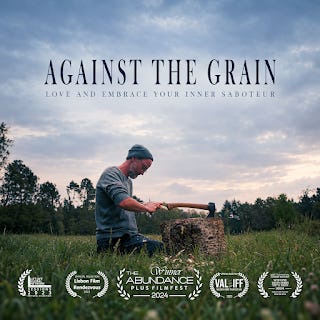
A few days ago, I watched Against the Grain, a short documentary by filmmaker Julian McIntosh about Arjen Dekker and his passion for carving wooden spoons. I’ve been thinking about it a bit since then. Dekker talks about discovering spoon carving and what it taught him about his own inner saboteur. My thoughts went to what it means to find something that fits us. Something we enjoy doing… something we feel connected to.
It also made me think about my mornings on the back porch with a cup of coffee. I appreciate having that time to sit and think about what matters while feeling connected to nature. I don’t always come away with an answer. But I value having the time and space to give those thoughts some attention.
That’s where my thoughts wandered over to outdoor recreation. We spend a lot of time helping people figure out what to do outdoors. How often do we consider how those experiences might help them figure out what matters to them?
Every experience doesn’t need to lead to some big personal discovery. Sometimes a good afternoon outside is plenty. Still, I think the film raises useful questions for outdoor recreation professionals about the experiences we offer, the places we manage, and how we understand a successful visit.
Make room for different ways of connecting with nature
Some people enjoy a challenging trail or learning a demanding outdoor skill. Others want to sit near the water, watch birds, or make something with their hands. My time on the porch reminds me that feeling connected to nature can be pretty simple.
If our image of outdoor recreation mostly features people going farther, faster, or higher, we may be overlooking experiences that would give someone else a reason to participate. Look at our program calendars, photographs, and descriptions. Would someone interested in a quiet afternoon outdoors see a place for themselves?
That question has practical implications for recreation programming and park management. A comfortable place to sit and an unhurried stretch of time can be part of a worthwhile experience. We don’t have to fill every minute of a program. We can give people time to pay attention to their surroundings and decide what interests them.
Give people a reason to return
Introductory programs give people a place to start. But what happens when someone discovers an interest they want to pursue?
Are there opportunities to return, practice, ask questions, and spend time with others who enjoy it? A beginning birding walk might lead to regular outings. An introductory workshop might give someone a reason to keep working on a skill.
A connection may also develop through the simple act of coming back to a familiar place. I think about that with my mornings on the porch. There’s value for me in making time for something familiar. In our parks and outdoor programs, we can consider how to make continued participation easier for someone who wants it.
Look beyond attendance when thinking about success
Attendance matters. So do skills and the ability to participate safely. But I’d also want to know whether someone felt comfortable enough to try something unfamiliar. Whether they had time to enjoy being there. Whether they found something they wanted to return to.
Those questions tell us something that a participation count can’t.
For outdoor recreation professionals, a brief conversation after a program could help us understand those experiences. What did someone enjoy? What would they like to try again? Was there something that made it difficult to participate? Their answers can help us make decisions about future programs and the spaces that support them.
Let people tell us what the experience means
Two people can participate in the same activity and get very different things from it. One might enjoy learning the skill. Another might appreciate having time to concentrate on something without interruption.
We won’t necessarily know unless we give them a chance to tell us. And we should leave room for an ordinary answer. Someone may simply have enjoyed being outside. We don’t need to turn that into something bigger on their behalf.
What interests me is the possibility that an activity becomes something a person wants to make room for in their life. Carving wood, fishing, hiking, or watching birds might become part of how they understand their interests and what matters to them. Our role can be to provide an opportunity and enough support for them to explore it on their own terms.
I appreciated how Against the Grain got me thinking about all of this through something as specific as carving a spoon. My own example is a cup of coffee on the back porch. Neither has to look particularly impressive to someone else to be meaningful.
When we plan the next outdoor program or consider how people use a park, I’d like us to leave some room for that. Someone may want a challenge. Someone else may want a quiet place to sit and think. Both deserve consideration.
Watch Julian McIntosh’s Against the Grain on Vimeo.